
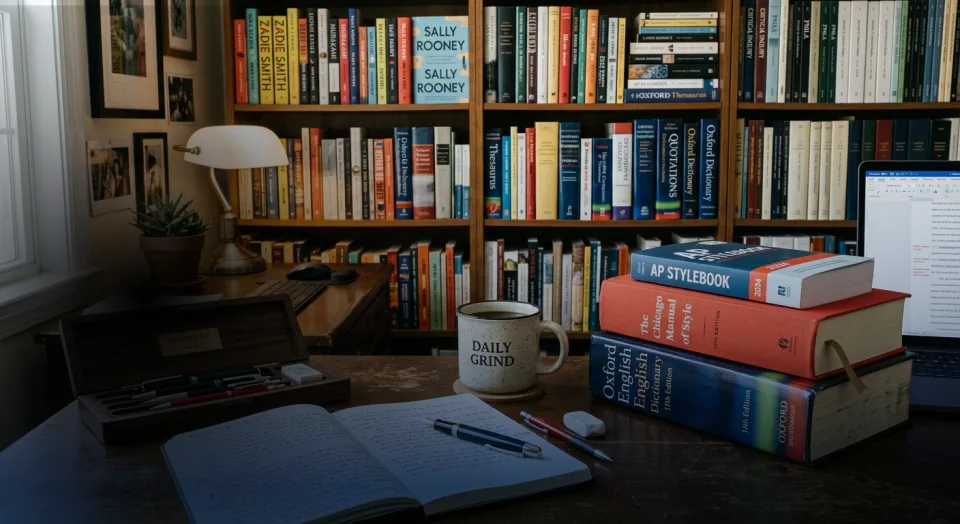
Print Media
Graphic design, copywriting, proofreading and editing for print and digital publications, including book editing to Canadian Press style.
Print Media covers the written and designed pieces your organization puts in front of people: brochures, signage, reports, books and the words inside them.
What is included
Graphic design for print and screen, copywriting in your voice, proofreading, book editing that follows Canadian Press style, and other editing services from copy editing to plain-language rewrites.
How it works
Tell us what you are producing and when you need it. You receive a written quote with a clear scope before any work begins.
Services in Print Media
-
Author Agency Representation
Author Agency Representation refers to the active framework and professional advocacy that centers the autonomy, voice, rights, and creative control of authors and creators.
-
Graphic Design
Marketing collateral that matches your brand, from brochures, signage and trade show banners to social media template kits your team can reuse. Designed for print and screen, with files ready to use.
-
Copywriting
Clear writing sells. We write in your voice, structure content so it answers real customer questions, and optimize it for search and AI answer tools. Every word is written by our team; we do not use AI to write copy or scripts.
-
Book Editing (Canadian Press Style)
Professional manuscript editing services for authors and publishers tailored to Canadian Press (CP) style and standard Canadian spelling. Offering structural editing, copyediting, and proofreading, every project is custom-quoted based on manuscript length, complexity, and the depth of editing required. Authors receive clean, publication-ready text refined for clarity, tone, and audience engagement
-
Editing Services
Professional document editing and writing services for reports, websites, marketing materials, and corporate publications, following Canadian Press style and standard Canadian spelling. We offer comprehensive editing tiers—including substantive structural edits, stylistic copyediting, and plain-language rewrites—designed to make complex information clear, engaging, and accessible.


Questions about Print Media
What types of genres or authors does your agency specialize in representing?
We represent fiction (literary and commercial), non-fiction (memoir, business, academic), and specialized educational manuscripts, focusing on authors with strong platform potential.
What prepress and file preparation standards do you require for high-volume print runs?
We require press-ready PDFs saved in CMYK color mode with a minimum resolution of 300 DPI. Files must include standard 1/8-inch (3mm) bleeds, crop marks, vector-outlined fonts, and flattened transparencies to prevent color shifts or misregistration during press runs.
How do you assist authors with pitch decks, manuscript proposals, and publisher queries?
We work directly with authors to craft compelling book proposals, refine sample chapters, build competitive market analysis decks, and pitch directly to target acquisitions editors.
How do I choose between offset printing and digital printing for my publication or print campaign?
Digital printing is optimal for short-to-medium runs, quick turnaround times, and variable data personalization. Offset printing is best for large-volume publications, offering maximum cost efficiency, superior image detail, and precise Pantone (PMS) spot-color matching.
What is your submission and placement strategy for commercial and academic publishers?
We leverage established relationships with major publishing houses, university presses, and independent publishers, submitting customized query packages tailored to each editor's active wishlist.
What eco-friendly paper stocks, inks, and sustainable printing practices do you offer?
We provide FSC-certified post-consumer recycled paper stocks, vegetable- and soy-based inks, and energy-efficient press production. We can also print official FSC certification logos and recycling symbols directly onto your printed materials.
How are literary rights, foreign rights, and subsidiary media rights negotiated?
Our agency negotiates primary publication rights while aggressively preserving foreign, translation, audio, film/TV adaptation, and merchandising rights for separate licensing deals.
How do specialty finishes like spot UV, foil stamping, soft-touch lamination, and embossing work?
Specialty finishes are applied post-printing to create tactile and visual highlights. Soft-touch lamination provides a velvet feel, spot UV adds glossy high-contrast sheen to specific visual elements, while foil stamping and embossing elevate metallic details and dimensional relief.
What support do you provide throughout the publishing and post-release promotional phases?
We guide authors through contract execution, editorial revisions, cover design approvals, publicity campaign alignment, and post-launch sales performance tracking.
How do you ensure strict color accuracy and brand consistency across different print substrates?
We manage color output using GRACoL/SWOP color profiles and hard-proof contract matchprints. On-press spectrophotometer scans monitor ink density throughout the press run to maintain exact color consistency across paper stocks.
How are royalties, contract terms, and client commissions structured for represented authors?
Commissions follow industry standards (15% on domestic sales, 20% on foreign/subsidiary deals), with clear royalty accounting, advance disbursement schedules, and audit protections built into contracts.
How can physical print media be integrated with digital marketing tracking?
We bridge physical print assets with digital channels by incorporating dynamic, trackable QR codes, personalized variable data URLs (PURLs), and Augmented Reality (AR) triggers that link readers directly to conversion pages and analytics tracking.
What file formats and design assets do you provide upon project completion?
We deliver press-ready PDFs (with bleeds and crop marks), packaged Adobe InDesign/Illustrator source files with linked graphics and vector assets, and web-ready previews.
What binding and finishing options are available for multi-page catalogs, magazines, and books?
We offer saddle-stitching for booklets up to 64 pages, perfect binding for clean square-spine catalogs and paperback books, case binding for hardcover editions, and wire-o or spiral binding for manuals and workbooks.
How do you ensure print design collateral adheres to strict brand guidelines?
We strictly align all print visual assets with your primary brand style guide—enforcing typography rules, brand color palettes, logo spacing, and grid architecture.
What is the proofing process before a project goes to full press production?
Every job undergoes an initial digital soft-proof review for layout, typography, and page imposition. For color-critical or multi-page projects, we produce physical contract proofs or invite clients for an on-site press check prior to running the complete press run.
What prepress requirements (bleeds, color profiles, resolution) do you implement for print production?
All assets are prepared using standard 1/8-inch (3mm) bleeds, minimum 300 DPI image resolution, CMYK/Pantone color spaces, and properly flattened vector transparencies.
How many revision rounds are included in standard graphic design agreements?
Standard design packages include three dedicated rounds of revisions following initial layout concept presentation to ensure complete satisfaction before prepress export.
Can you assist with selecting paper stocks, specialty finishes, and printing partners?
Yes, we collaborate with press partners to recommend paper weights, coatings (matte, gloss, soft-touch), spot UV, foil stamping, and embossed textures tailored to your budget.
What is the typical turnaround time for custom print graphic design deliverables?
Single-page print collateral (flyers, ads) takes 3–5 business days, while multi-page brochures, catalogs, and annual reports take 2–3 weeks from concept approval.
How do you align tone of voice and messaging with our brand identity?
We begin with a brand voice audit and discovery session, analyzing your audience demographics and corporate style guide to ensure copy reflects your distinct tone and values.
What is your intake process for researching complex or niche industry topics?
Our writers conduct deep-dive research, subject-matter expert (SME) interviews, competitor analysis, and audience polling to translate complex concepts into clear, engaging copy.
Do you provide copy editing and proofreading alongside initial copy draft creation?
Yes, all copywriting deliverables pass through a rigorous two-step internal editing process checking grammar, tone consistency, flow, and structural precision before delivery.
How do you handle revisions based on stakeholder or subject-matter expert feedback?
We incorporate tracked changes and comments systematically, conducting collaborative review calls to resolve technical feedback quickly across project milestones.
Can copywriting assets be adapted across both print collateral and digital touchpoints?
Absolutely. We write modular content blocks designed to easily reframe long-form print copy into website copy, email messaging, and social media captions.
What information or brief is required from our team before starting a copywriting project?
We provide a structured brief requesting campaign goals, target audience personas, key messaging points, word count targets, and existing reference materials.
What style guides (e.g., Chicago, AP, Canadian Press) do you follow for proofreading?
Our proofreaders are fluent in Chicago Manual of Style, AP Stylebook, Canadian Press (CP) Style, APA, and custom corporate style guides based on client requirements.
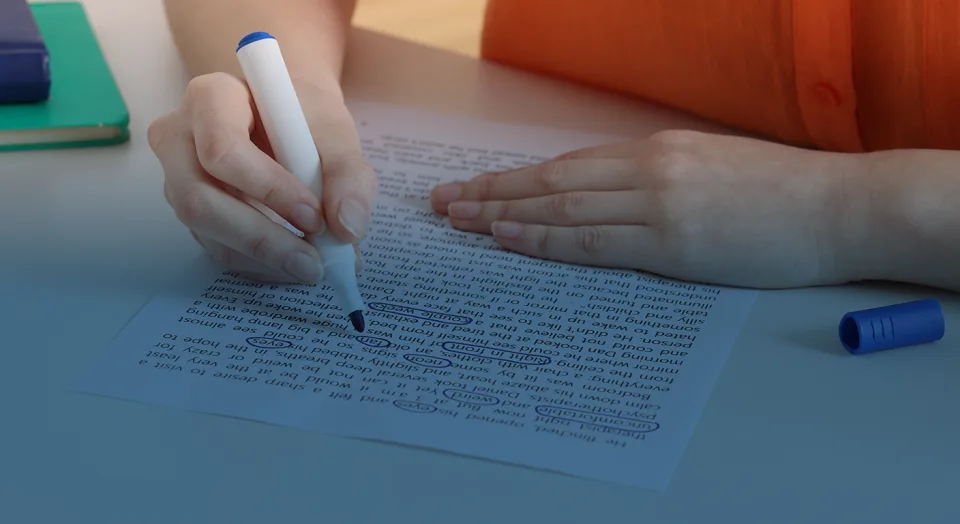
What specific elements are checked during a final proofread (grammar, typos, formatting, layout)?
We verify spelling, punctuation, syntax, hyphenation, page numbers, running headers, table alignment, image captions, and orphan/widow lines in layout proofs.
How does proofreading differ from structural or copy editing in your workflow?
Proofreading is the final quality check on formatted page proofs to catch lingering typographical errors and visual formatting bugs, rather than rewriting prose.
What file formats (PDFs, Word documents, InDesign proofs) can you proofread directly?
We mark up PDF page proofs using standardized Adobe Acrobat commenting tools, edit Word files via Track Changes, or review direct InDesign proof packages.
How do you track and highlight changes for our editorial team to review?
All corrections are clearly annotated using industry-standard proofreading marks and digital markup tools, accompanied by an executive summary of key edits.
What is your standard turnaround time for proofreading lengthy print documents?
Short documents (under 10 pages) are completed within 24–48 hours, while book-length manuscripts or multi-page annual reports require 5–7 business days.
How do you apply Canadian Press (CP) Style rules to book manuscripts and editorial publications?
We enforce CP conventions regarding Canadian spelling (-our endings, doubled consonants), metric measurements, capitalization rules, abbreviation guidelines, and numeral usage.
What balance do you strike between maintaining author voice and adhering to CP style conventions?
We preserve the author's narrative tone, style, and dialogue pacing, applying CP rules specifically to factual accuracy, mechanics, consistency, and structural clarity.
Do you offer comprehensive editing, including structural, stylistic, and copy editing?
Yes, our CP editorial services cover multi-pass editing—addressing macro structure and pacing first, followed by paragraph-level stylistic refinement and micro mechanics.
How are Canadian spelling, capitalization, and punctuation standards verified throughout the text?
We run automated style dictionaries alongside meticulous manual editing to maintain 100% adherence to Caps and Spelling guidelines from the Canadian Press.
What tool or format do you use to return tracked changes and editorial queries to the author?
Manuscripts are returned as Microsoft Word files with Track Changes enabled, paired with margin comments and a comprehensive editorial style sheet.
How do you estimate editorial timelines for full-length book manuscripts?
Timelines are based on word count and manuscript complexity; a typical 70,000-word book manuscript takes 3 to 5 weeks for a complete editorial pass.
What levels of editing (substantive, copyediting, line editing) do you offer for print publications?
We offer developmental editing for structure and narrative flow, line editing for prose clarity and voice, and copyediting for grammatical precision.
How do you ensure consistency in terminology, tone, and layout formatting?
We construct a custom style sheet for every project, logging character/brand names, preferred spellings, acronym definitions, and specific formatting rules.
What is the standard workflow for reviewing and approving editorial suggestions?
Clients receive the edited draft with tracked changes and an editorial notes document, allowing line-by-line acceptance or rejection of proposed edits.
Can you edit print materials according to customized corporate style guides?
Yes, we regularly integrate internal corporate style manuals, terminology databases, and brand glossaries into our editing pipeline.
How do you estimate turnaround time and cost based on manuscript word count?
Estimates are calculated based on total word count and editing depth required (light, medium, heavy) following a complimentary 1,000-word sample edit.
What file formats do you accept for editorial review and markups?
We accept Microsoft Word (.docx), Google Docs, plain text, and Adobe InDesign editorial files (.idml).
What criteria do you use when evaluating authors for representation?
We evaluate manuscript quality, platform reach, genre market demand, author background, and long-term career publishing potential.
How do you help authors refine their manuscripts and proposals for publishing executives?
We conduct developmental edits on manuscripts and polish query materials so proposals meet the stringent expectations of top acquisition editors.
What approach do you take to negotiating contract terms and advance structures?
We negotiate optimal financial advance terms, favorable royalty escalations, clear publishing schedules, and protective non-compete clauses.
How do you support authors with marketing, book tours, and publicity initiatives?
We liaise with publisher marketing teams, coordinate independent PR campaigns, arrange speaking opportunities, and build digital author platform strategies.
What ongoing career guidance do you provide to published authors for future releases?
We provide long-term career planning, advising on option books, brand expansion, cross-media adaptations, and genre positioning across multi-book deals.
How do you manage intellectual property rights across foreign markets and adaptation formats?
We partner with international co-agents and film/TV rights specialists to pitch rights globally at major book fairs and media marketplaces.